
Ever wondered if that shiny dress is real or fake? Cultural significance of these handwoven clothes is huge. They show centuries of Indian history and amazing skill.
But, today’s market is full of fake copies that look like authentic Banarasi sarees. Choosing the real one is more than just fashion. It’s about keeping our master weavers’ legacy alive.
Knowing how to tell the real from the fake is key. It saves your money and respects the hard work in every thread. By knowing the signs of real craftsmanship, you help the artisan community more than fake goods.
Key Takeaways
- Learn about the rich cultural history of Indian handloom textiles.
- Know the big challenge of finding quality goods in a busy market.
- See why checking your buy helps keep skilled weavers alive.
- Find out the key signs of a real piece to look for.
- Feel sure you can tell real art from fake in the market.
Understanding the Heritage and Craftsmanship of an Authentic Banarasi Saree
Every beautiful saree has a long history of handloom weaving. This tradition makes Indian textiles special. Buying a Banarasi silk saree means you get a piece of history.
The Historical Significance of Varanasi Weaving
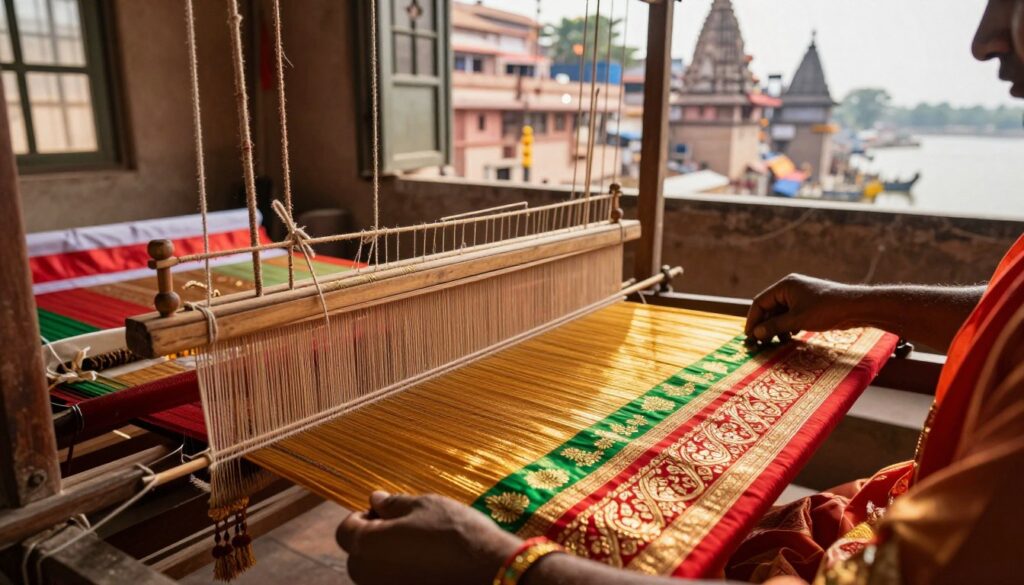
The history of Varanasi heritage goes back to the Mughal era. This time made the local weaving famous worldwide. Weavers learned to add gold and silver threads to silk.
This history still shapes today’s textiles. The designs you see today come from long practice. Each pattern tells a story of culture and art.
Distinguishing Handloom from Power-Loom Production
It’s important to know the difference between handloom weaving and power-loom. Power-looms might look like Banarasi silk, but they don’t feel the same. Handloom weaving is more than just making clothes.
Handloom making takes a lot of time and skill. Power-looms focus on making lots of clothes fast. They make clothes that feel the same but lack the human touch.
| Feature | Handloom Saree | Power-Loom Saree |
|---|---|---|
| Production Time | Weeks to Months | Hours to Days |
| Weaving Quality | Unique, slight variations | Perfectly uniform |
| Fabric Feel | Soft and breathable | Stiff and synthetic |
| Value | High investment/Heirloom | Low cost/Disposable |
Knowing these differences helps you value the Varanasi heritage in your purchase. Choosing real Banarasi silk supports the traditional craft. It keeps this ancient art alive for the future.
Examining the Reverse Side of the Fabric
Turning a fabric over can reveal its true nature. The front may look polished, but the back tells the real story. It shows if the item was made by hand or machine.
Identifying Float Threads and Weaving Patterns
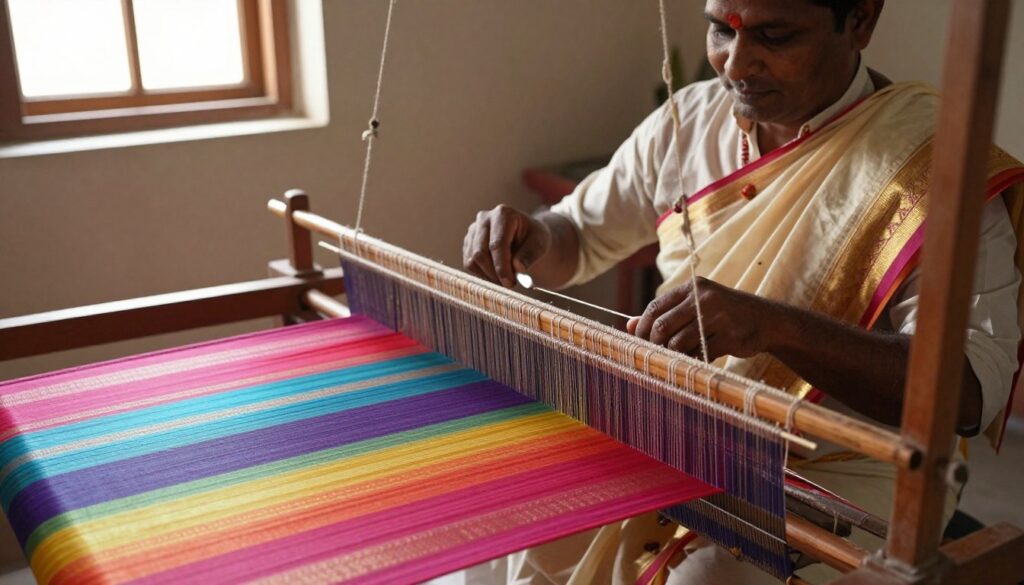
A hand-woven saree often has loose threads between designs. These are float threads, a sign of handloom weaving. Weavers move shuttles by hand, leaving these threads on the back.
These threads are not flaws but signs of real craftsmanship. A fake fabric will have a clean back without these threads. A real piece shows its design’s texture on the back, showing its complexity.
Why Machine-Made Sarees Lack the Intricate Back Finish
Machines make fabrics fast and even, but they miss the human touch. Power-looms cut threads automatically, making the back flat. This process takes away the unique touch of hand-woven sarees.
The table below shows what to look for when checking your fabric:
| Feature | Hand-Woven Saree | Machine-Made Saree |
|---|---|---|
| Float Threads | Present and visible | Absent or trimmed |
| Back Texture | Slightly uneven/rough | Perfectly smooth |
| Design Depth | High complexity | Uniform/Flat |
| Production | Manual skill | Automated speed |
Checking the Texture and Feel of the Silk
When you hold Banarasi silk, your hands tell you a lot. Patterns are nice, but feeling the fabric is more telling. It helps you know if it’s real or fake.
The Natural Lustre of Pure Mulberry Silk
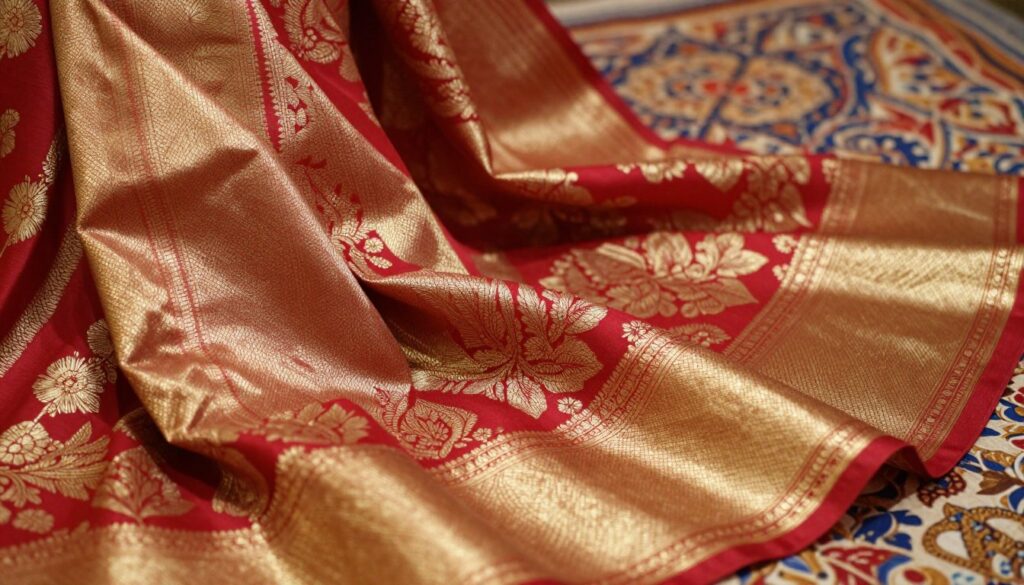
Pure mulberry silk has a soft glow. It’s different from fake fabrics. Authentic silk shines in a special way that changes with the light.
“Quality is never an accident; it is always the result of high intention, sincere effort, intelligent direction and skillful execution.”
This glow is a sign of quality. If it looks too shiny, it might be fake. Look for a soft, shimmering look that shows it’s real.
Testing for Silk Purity Through Touch and Temperature
Do a silk purity test by feeling its warmth. Real silk gets warm fast when you hold it. If it stays cool, it’s probably fake.
The feel should be smooth and soft. It should feel good against your skin. Here’s how it compares to other materials:
| Feature | Pure Mulberry Silk | Synthetic Blend |
|---|---|---|
| Temperature | Warms up quickly | Stays cool |
| Texture | Soft and supple | Slippery or plastic-like |
| Drape | Fluid and graceful | Stiff or bulky |
Pay attention to how it feels to touch. This way, you can spot authentic silk easily. Trust your senses to find real, quality silk.
Analyzing the Zari Quality and Metallic Content
The Zari quality shows if you have a real treasure or a fake. Looking at a traditional saree, the metallic thread tells a lot. It shows the skill of the maker. Knowing this helps you buy something that will stay beautiful for a long time.
Differentiating Between Tested Zari and Pure Gold/Silver Zari
Old Banarasi sarees used real gold or silver threads. Now, “tested” Zari is common. It’s a copper thread with a gold look. It’s cheaper but doesn’t last as long and can tarnish easily.
Pure Zari, on the other hand, stays bright because it’s real metal. You can tell by how the fabric ages. If it gets dull or shows signs of rust quickly, it’s not the best.
The Weight and Flexibility of Authentic Metallic Threads
The thread’s feel also tells you a lot. Real metallic thread is soft and bends easily. It looks good on silk. If it feels hard or heavy, it might be fake.
Try bending a small part of the border to see if it breaks. Good Zari bends without breaking or creasing. This shows the maker’s skill, making the saree comfy to wear.
| Feature | Pure Zari | Tested Zari |
|---|---|---|
| Material | Gold/Silver wire | Copper with gold polish |
| Flexibility | High and soft | Low and stiff |
| Tarnish Resistance | Excellent | Poor |
| Weight | Lightweight | Heavy |
Inspecting the Motifs and Design Precision
Understanding the artistry behind traditional motifs is key for fine Indian textile collectors. These patterns show centuries of culture and art growth. Looking at the design’s layout and sharpness tells you a lot about its quality.
Common Traditional Motifs Like Butidar and Shikargah
A top hand-woven saree often has classic patterns. The Butidar design has repeating flowers or leaves, making it elegant. The Shikargah motif shows hunting scenes or wildlife, woven into the silk.
Creating these designs needs a lot of skill. Look for depth and clear weaving when checking these patterns. A quality piece will have clear designs and sharp edges.
Spotting Irregularities That Prove Human Craftsmanship
Some think a uniform design means quality. But, in a real hand-woven saree, small differences are a sign of authenticity. Because they’re made by hand, you might see slight variations in the motifs.
These small differences show a human made it, not a machine. Seeing these variations means you have a unique, handcrafted piece. It’s different from mass-produced items.
Verifying the Geographical Indication (GI) Tag
When you buy a premium saree, the Geographical Indication (GI) tag protects you. It shows the saree was made in Varanasi’s traditional weaving areas. This tag links old traditions to today’s trust in products.
What the GI Tag Represents for Banarasi Textiles
The GI tag is a special right that guards the cultural legacy of the area. It proves the Banarasi textile was made the old way, by local weavers. Buying items with this tag helps the artisans who keep these old ways alive.
This tag is more than a label. It’s a government promise of realness. It stops fake, machine-made items from being called Banarasi silk. Seeing this mark means the fabric meets high standards set by the weavers.
How to Locate and Validate Official Certification Marks
To check if a GI tag is real, look for the official logo on the saree or its box. You’ll also see the handloom mark, which shows quality. These signs are usually on a tag or label inside the fabric.
If you’re not sure about a mark, check it against the official database. Many shops give a certificate of authenticity with a unique number. Make sure the tag info matches what you got when you bought it.
| Feature | Authentic Banarasi | Counterfeit Product |
|---|---|---|
| GI Tag Presence | Official Logo Present | Missing or Fake Label |
| Handloom Mark | Verified Certification | Absent or Printed |
| Weaving Origin | Varanasi Cluster | Unknown/Machine Factory |
| Legal Status | Protected by Law | No Legal Standing |
Evaluating the Pallu and Border Construction
Checking the saree pallu is key to its true heritage. These parts are the most fancy parts of the dress. They show the best art skills.
By looking closely, you can tell real art from fake. This helps you find true masterpieces.
The Significance of the Weaving Transition at the Pallu
The spot where the main fabric meets the saree pallu is important. In hand-woven clothes, this spot should look perfect. Look for threads that are the same tightness.
Big changes or gaps mean it’s not made well. Good weavers make this spot smooth. It shows their skill.
Assessing the Density and Complexity of Border Designs
Real Banarasi clothes have thick, shiny borders. Look for these signs of quality:
- Thread Density: Good borders feel thick and strong, not weak.
- Design Complexity: Real designs are detailed and clear, not fuzzy.
- Uniformity: Patterns should be perfect, showing the weaver’s care.
Machine-made clothes can’t match handloom’s depth. The saree pallu and borders of real clothes feel special. Always check these details for a true Varanasi textile.
Asking the Right Questions to Retailers and Weavers
Asking about the silk’s origin is key to getting a genuine Banarasi piece. Talking to retailers lets you see beyond looks to the item’s true worth. This way, your money buys quality and tradition.
Inquiring About the Source and Weaving Cluster
First, ask where the saree was made. Real ones come from Varanasi, where families weave for years. Knowing the specific cluster proves it’s not fake.
Also, ask about the silk and threads’ source. Good sellers will say the silk comes from trusted places. This shows it’s real and not fake.
Requesting Documentation or Proof of Authenticity
Always ask for papers or certificates before buying. Top retailers give these to prove the item’s real. This guarantee of quality is important.
Looking for these papers helps fair trade in textiles. It keeps old weaving ways alive. So, you get a genuine Banarasi saree that will be treasured for years.
Conclusion
Choosing a real Banarasi saree needs careful attention and love for tradition. You now know how to spot true craftsmanship from fake ones.
By checking the GI tag and looking at fabric textures, you help real weavers. Every choice you make keeps old weaving skills alive in Varanasi.
Buying a real Banarasi saree links you to a rich history of beauty and skill. Wear it proudly, knowing it’s the best of Indian textiles.
Talk to local artisans to help make the market more open. Your focus on quality keeps this ancient art alive for more years.